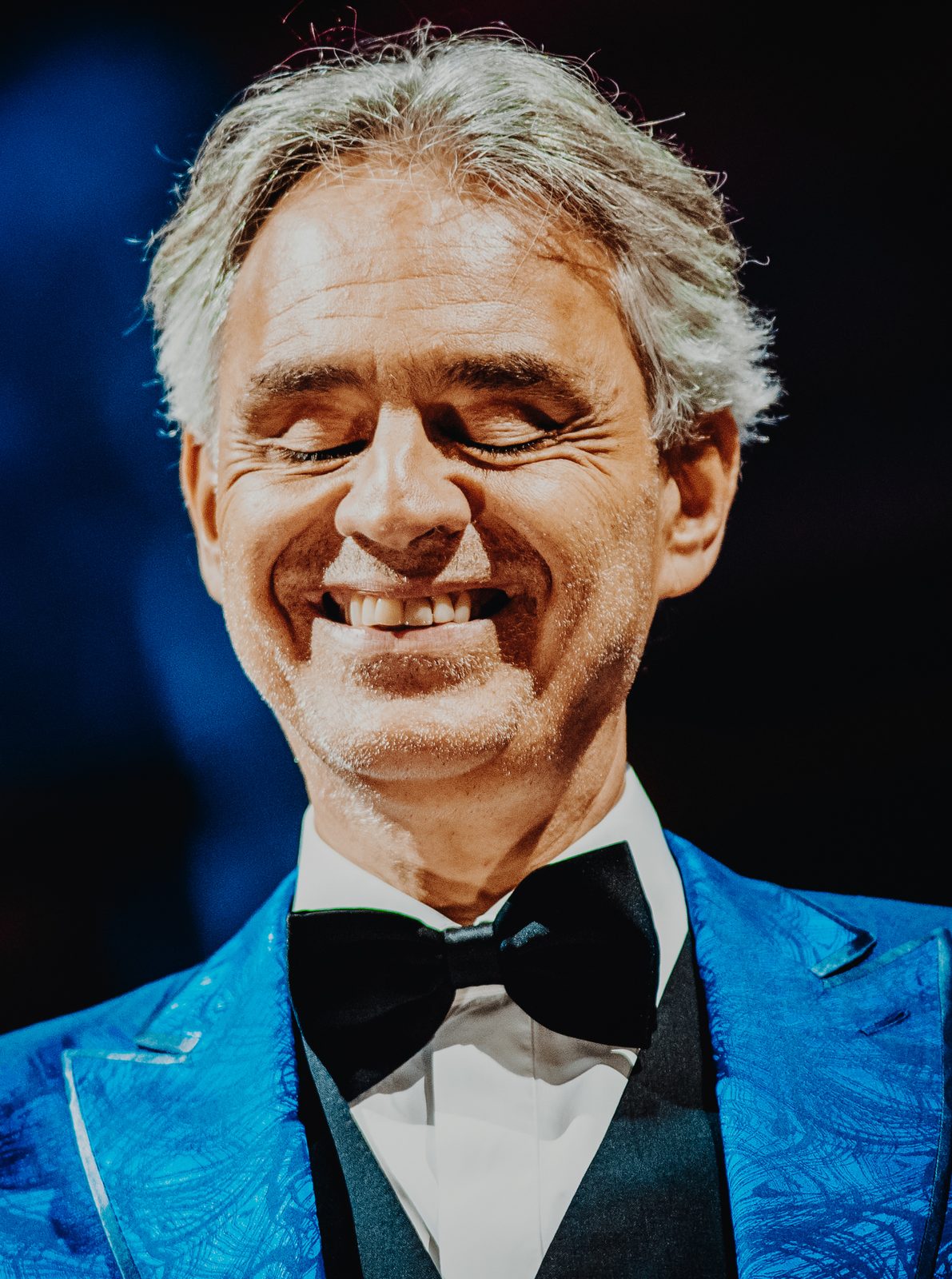
Andrea Bocelli and Ilaria della Bidia in September 2019. Archive image, not of the concerts announced for 2026. CC BY 2.0 · Wikimedia Commons
Andrea Bocelli has the kind of career that can be familiar through a single song while still leaving much to discover. Researching his schedule and catalogue, we found a particularly useful starting point: Romanza. The name identifies an album, but also appears in the tour announced as the Romanza 30th Anniversary World Tour. For anyone considering a concert or wondering why this Italian singer brings together such different audiences, separating those two things helps more than repeating a list of hits.
This documentary guide was prepared on October 30, 2026. We have not attended the concerts mentioned here, nor do we claim to have heard a future performance. We checked the artist’s calendar, a venue listing and his official discography to distinguish released songs, announced dates and expectations that cannot yet be confirmed.
Which dates are still ahead
Andrea Bocelli’s official schedule announces Borobudur, Indonesia, for October 31, 2026, and Jakarta International EXPO for November 3. It also lists Little Petra, Jordan, on November 27; Abu Dhabi on December 2; and San Salvador on December 5. These are performance dates, not news publication dates. Their presence on the calendar does not prove that tickets remain in every category.
The itinerary continues in North America during December and extends into 2027. That continuity interests us because it prevents the anniversary from being read as a single commemorative evening. The tour offers an extended invitation to revisit a repertoire, while each city has its own admission arrangements, venue and ticket sales. We would not automatically transfer the schedule of one date to another, even when the production has the same name.
Romanza: a specific starting point
The Romanza entry in the singer’s discography is dated 1997. Its titles include Con te partirò, Vivo per lei, Caruso, Il mare calmo della sera and Time to Say Goodbye. It also credits collaborations with Giorgia, Gerardina Trovato and John Miles. This is a more precise place to begin than a playlist mixing versions without identifying their performers.
It is worth keeping the year displayed in that entry separate from the commercial name of the tour beginning in 2026 and continuing afterward. We are not assigning a new release date or claiming that all historical editions of the album appeared simultaneously. When a celebration spans several territories and seasons, its promotional title does not replace the catalogue’s chronology.
For a first introduction, we suggest listening to a solo song and then a duet. The question changes: first we can notice how the voice sustains a phrase; then how two singers share the spotlight. It is a simple exercise, but it allows a connection with the repertoire without requiring knowledge of vocal technique or deciding beforehand whether it belongs to a single musical category.
An Italian voice in a shared repertoire
At Brecilia, we find that circulation more interesting than setting labels against one another like rival teams. One listener might arrive through a melody recognised from a family celebration, another through a collaboration, and another through an interest in the Italian vocal tradition. None of these starting points requires everyone to listen the same way. Familiarity with a song can begin an exploration rather than limit it.
The official chronology for 1992 to 2001 places Romanza within Bocelli’s international expansion and records his work in operatic recitals. That context helps explain why searches for his name return both songs and titles associated with opera. It does not, however, turn every concert on his tour into a staged opera or allow us to predict its full programme.
Anyone expecting a theatrical production with characters, dramatic continuity and a complete work should check the advertised format before buying. A concert of vocal repertoire may be organised differently. That practical distinction matters more than giving an event a prestigious label and discovering afterward that a different experience was expected.
What a venue confirms, and what it does not
The TD Coliseum page for December 19, 2026 identifies the show as part of the Romanza 30th Anniversary World Tour. For that Hamilton date, it announces an 8 p.m. start and doors opening at 6:30 p.m. The presentation mentions familiar songs, including Con te partirò, and credits AEG Presents with the production.
That provides a useful reference for the format, but it does not amount to a definitive setlist for Indonesia, Jordan or El Salvador. Nor does it guarantee a particular guest will appear because they feature on an album or performed in another city. We prefer to leave that question open: a concert’s appeal does not need an unconfirmed duet to support it.
The same page retains earlier promotional information about other performances. When planning an outing, we would therefore read the event heading, date and practical information first. A historical paragraph can remain visible long after the event it describes. Finding an active page does not mean every sentence is written from the present.
Preparing to listen without making it homework
Reasonable preparation can take less time than the journey to the venue. We would choose three pieces from the edition of Romanza available to us, check the credits and note what attracts our attention: the melody, language, another voice or accompaniment. Enjoying a performance does not require learning a complete biography.
We would then compare identified versions of the same song, if the catalogue offers them. Comparison makes sense when we know what is being compared: studio against live, solo against duet, or one edition against another. Changing all those variables at once can lead us to attribute a difference to the singer when it comes from the recording or arrangement. Reading credits is also part of listening with curiosity.
For a group outing, sharing that small selection can be more useful than promising every title will be performed. Someone accompanying a regular fan gains a starting point; someone who has listened to Bocelli for years can explain which song interests them and why. The concert can thus begin as a conversation, without turning the announced repertoire into a list of obligations.
Before choosing a ticket
Our final approach is simple: begin with the artist’s calendar, then check the chosen venue’s listing. We would review the seat location, accessibility arrangements, door-opening time and rules for that particular event. The official link points toward the sales channel, but availability and the final price must be checked at that moment, not inferred from an old press release.
Romanza remains a clear way into Bocelli’s world because it helps identify songs, collaborators and different ways of presenting the same voice. The tour offers another opportunity to encounter that repertoire. The rest belongs to each listening experience: what a melody recalls, the attention we give a phrase, and the curiosity that takes us from a familiar song to one we had not yet sought out.


