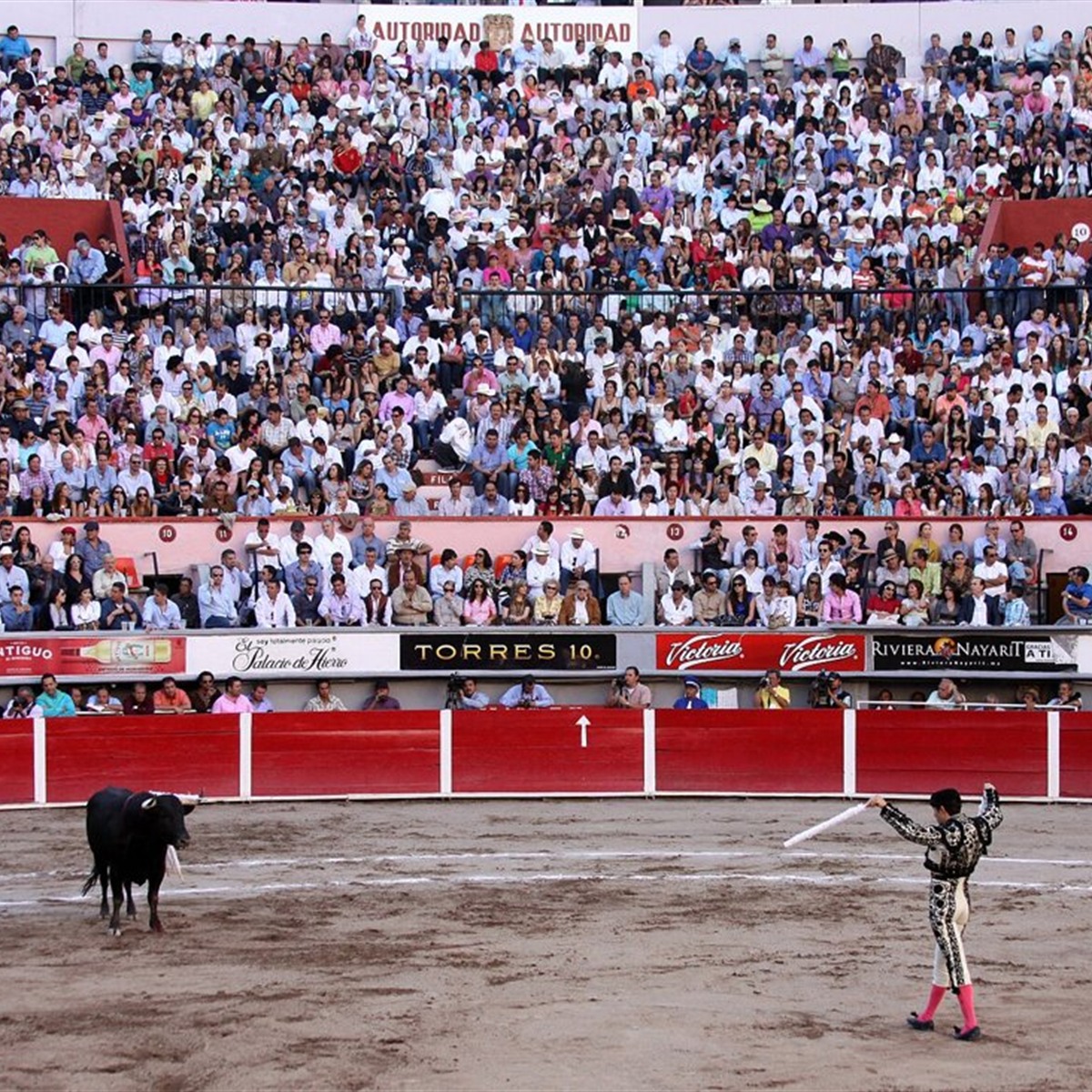
Few celebrations in Mexico reshape a city the way the Feria Nacional de San Marcos reshapes Aguascalientes. For roughly three weeks, the state capital hands its streets, gardens and fairgrounds over to the largest celebration in Aguascalientes and one of the most important fairs in the country — a meeting point for music, livestock and commercial exhibitions, food, and an enormous amount of live performance. If you follow Mexican popular music, this is one of the dates that defines the year, and it is the kind of event our team at Brecilia Música keeps returning to for exactly that reason.
What the Feria de San Marcos Is
The Feria Nacional de San Marcos is the biggest celebration in Aguascalientes and one of the most important fairs in Mexico. It is not a single event held behind one gate: the programme brings together a palenque, a teatro del pueblo, livestock and commercial exhibitions, gastronomy and a broad musical lineup. That combination is what gives the fair its character. A visitor can move from an exhibition hall to a food stall to a stage in the course of an afternoon, and the celebration keeps going around them.
Because the fair is built on several pillars at once — the musical programme, the expositions, the food, the social life of the city — it speaks to very different audiences at the same time. Families, producers, traders and music fans all find their own version of San Marcos, and they all share the same streets while they do it.
Origins and Dates
The fair is organised around April 25, the feast day of Saint Mark — San Marcos — which gives the celebration its name. It usually extends over about three weeks, so the calendar of the city is effectively reorganised around it: the days build towards the feast day and continue past it.
That timing matters for the atmosphere. The fair is not a closed convention with a badge and a lanyard; it is a period in the life of Aguascalientes when the ordinary rhythm of the city is replaced by a festive one. Understanding the date is the first step to planning around the fair — and to understanding why the city feels so different while it lasts.
The Palenque and the Music Stages
Mexican popular music has a central role in the fair, especially at the palenque and on the popular stages. Banda, norteño and mariachi are the sounds that define San Marcos: they are what people come to hear, and they set the tone of the night.
The palenque is one of the emblematic settings of the fair, and the teatro del pueblo is another key stage within the broad musical programming. Between them, the fair can offer a wide range of live music across its three or so weeks. For listeners, that is the heart of the experience: the chance to hear this repertoire in the place and the season where it is most alive.
If you want to prepare before you go — or keep listening after — the catalogues and features at Brecilia Música and the streaming at Brecilia Radio are good places to start.
Gastronomy and Fairground Life
Gastronomy is one of the pillars of the Feria de San Marcos, and it is inseparable from the way people move through the fair. Eating is not a pause between activities; it is one of the activities. Food is part of the same continuous social flow as the exhibitions and the stages, and much of the pleasure of the fair lies in that overlapping: standing at a table, talking, then drifting towards the next thing.
The livestock and commercial exhibitions give the fair another layer, reminding visitors that San Marcos is also a meeting point for producers and traders from the region — a place where the agricultural and commercial life of Aguascalientes is on display alongside the music. The result is a fair where a conversation about cattle can sit next to a conversation about a set list, and neither feels out of place.
The City During the Fair
Aguascalientes lives the fair in its streets, gardens and fairgrounds. That is perhaps the most distinctive thing about San Marcos: the celebration is not confined to a venue. The city itself becomes the stage, and public space is where the fair actually happens.
For visitors, this means the experience is measured in walking. You move between gardens, streets and fairgrounds, and the fair reveals itself in that movement rather than in a single ticketed space. The city's everyday geography — the places you would pass on any normal day — becomes part of the celebration, and the boundary between the fair and the city becomes hard to find.
How to Experience It and What to Listen To
Approach San Marcos with the music as your anchor. The fair's musical programming is broad, so decide in advance which of its worlds you want: the palenque, with Mexican popular music at its centre, or the popular stages, where the same repertoire reaches a wider, more spontaneous audience. If banda, norteño and mariachi are what you care about, plan the rest of your day around the sets rather than the other way round.
Give the fair time. Three weeks is long, and the celebration has different moods at different moments; the exhibitions, the gastronomy and the street life are worth as much attention as the stages. And because the fair takes place in the city's streets and gardens as much as in its venues, the best way to live it is simply to walk, listen and let the programme find you.
For more context on the music you will hear, the archive at Brecilia Música and the articles at the Brecilia blog are good companions before and after the trip.
When is the San Marcos National Fair celebrated in Aguascalientes and what are its main music stages?
The Feria Nacional de San Marcos (FNSM) runs for three weeks every spring from mid-April to early May —centered around St. Mark’s feast day on April 25— spanning over 90 hectares from Jardín de San Marcos to Isla San Marcos in Aguascalientes. Its premier live music venues include the open-air Foro de las Estrellas (hosting free international concerts), the Palenque arena, Foro del Lago, Cuartel del Arte, and Teatro Morelos.
What is the musical anthem of the San Marcos Fair and what genres are performed?
The signature musical anthem of Aguascalientes is "Pelea de Gallos," composed in 1943 by Chilean songwriter Juan S. Garrido and performed by mariachi and brass bands throughout the fairgrounds. Across the Foro de las Estrellas, Palenque, and Foro del Lago, audiences enjoy mariachi, banda, regional Mexican, Latin pop, international rock, jazz, and classical music; for a closer look at the fair’s two flagship concert arenas, read our guide to Foro de las Estrellas and the Palenque at the San Marcos National Fair.