What Is the Festival de Calaveras?
The Festival Cultural de Calaveras is a celebration held in Aguascalientes around the Día de Muertos, between late October and early November. It is a festival where the city brings together parades, altars, exhibitions, music, and performing arts in plazas and venues. At its heart is a tradition that combines humor, memory, and popular art. The calaveras literarias and the comparsas are central to the celebration, giving the festival a tone that is both festive and reflective. Rather than treating death as something distant or solemn only, the Festival de Calaveras approaches it through creativity, humor, and remembrance. The result is a cultural event that belongs to the community and to the Mexican imagination, and that invites visitors to understand Day of the Dead as a living tradition rather than a fixed image.
José Guadalupe Posada and the Calavera
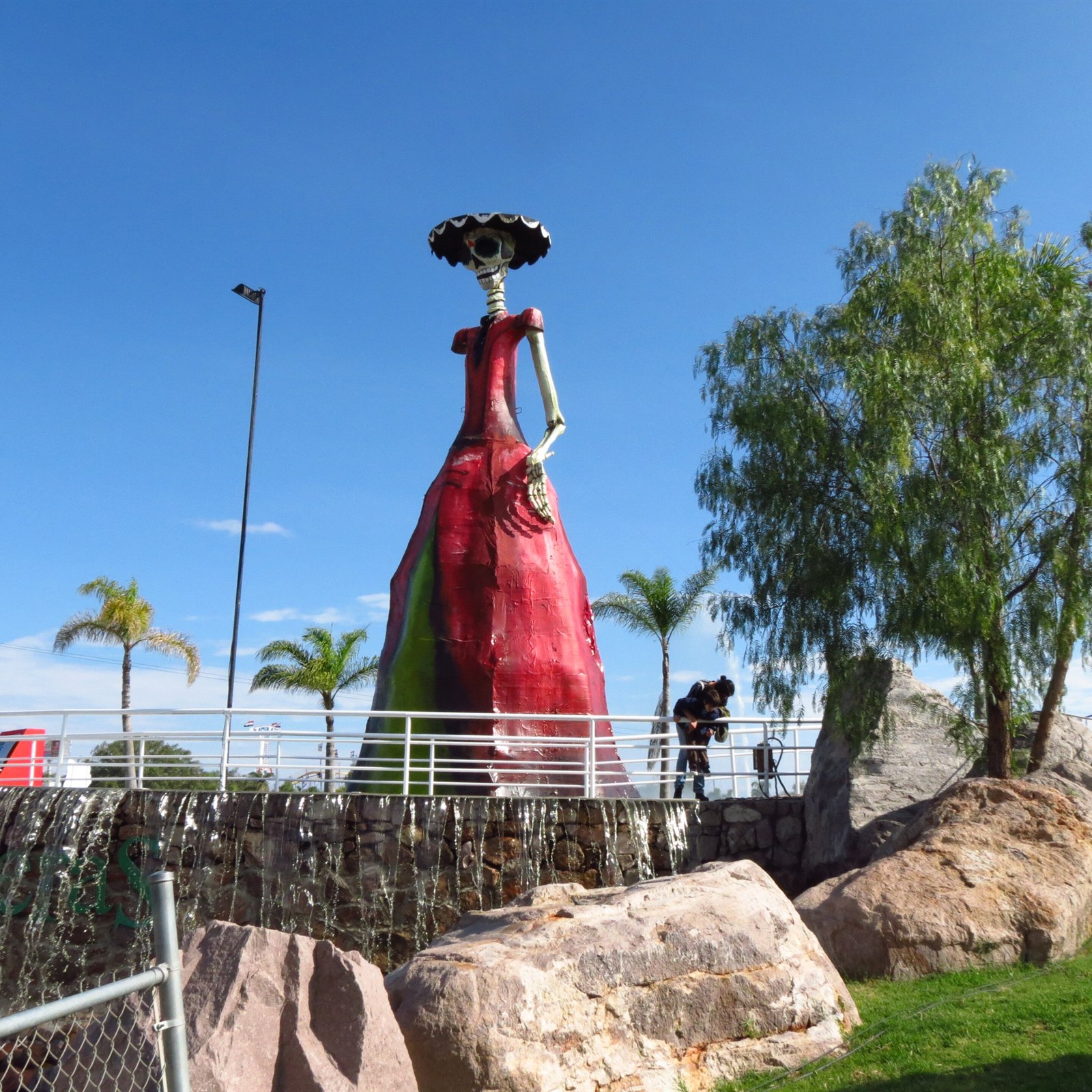
Aguascalientes is the birthplace of José Guadalupe Posada, the engraver whose calaveras gave shape to the Mexican iconography of death. That connection gives the Festival Cultural de Calaveras a particular historical weight. The calavera is not simply a decorative figure in this context; it is part of a visual language that has traveled through popular art and collective memory. The festival takes that language into the streets and public spaces through parades, exhibitions, and other expressions. In the festival context, the calavera connects the city's artistic past with the present celebration. For visitors, understanding Posada's link to the city helps explain why the calavera appears everywhere during the celebration. It is a reminder that the imagery of Day of the Dead is not a recent costume but a tradition with deep roots in Mexican art and popular imagination.
Day of the Dead in Aguascalientes
In Aguascalientes, the Día de Muertos period is marked by the Festival Cultural de Calaveras, which places memory and celebration in public space. The festival includes altars, exhibitions, music, and performing arts, alongside parades and comparsas. Its tone combines humor, memory, and popular art, so the experience moves between reflection and festivity. The calaveras literarias add wit and commentary, while the altars create spaces for remembrance. This mixture is central to the celebration: the festival does not treat death as a single mood but as a cultural conversation. The calavera appears as a shared reference across these activities. Visitors encounter a city that is remembering through art, music, and collective participation, with the calavera as a recurring symbol and a point of entry into Mexican traditions.
Parades, Altars, and Comparsas
The festival's public life is most visible in its parades, altars, and comparsas. Parades move through the city and bring the calavera imagery into the street, while altars create places for memory and remembrance within the festival's program. Comparsas are central to the celebration, adding group energy and performance to the event. The combination gives the Festival de Calaveras a rhythm that shifts from procession to observation, from collective movement to quieter reflection. Exhibitions and performing arts expand the experience in plazas and venues, so there are many ways to encounter the festival. The calaveras literarias contribute another layer: humor and commentary that keep the tradition alive and connected to everyday life. Together these elements show how Day of the Dead can be both art and popular celebration.
Music in the Streets
Music is part of the festival's program, with performances in plazas and venues and a presence that accompanies parades and comparsas. In the streets, music gives the celebration a public pulse and helps turn the city into a shared stage. The festival's program places music alongside altars, exhibitions, and performing arts, so the experience is never only visual. For visitors, moving between one event and another means encountering different moods: the energy of a comparsa, the reflection of an altar, and the collective sound of a plaza. The presence of music in the streets also reinforces the festival's collective character. If you want to keep exploring after the festival, music.brecilia.com and radio.brecilia.com are useful places to continue listening and to connect with the musical side of the celebration.
How to Experience It
To experience the Festival Cultural de Calaveras, it helps to approach the city as a cultural route rather than a single event. Look for the festival's parades, altars, exhibitions, music, and performing arts in plazas and venues, and give yourself time to move between them. Pay attention to the calaveras literarias and the comparsas, since both are central to the celebration and reveal its mix of humor, memory, and popular art. Read the calaveras literarias as part of the city's humor and commentary, not merely as decoration. The festival is most rewarding when you let the public spaces set the pace: watch, listen, read, and observe. For more context on Mexican culture and celebrations, see brecilia.com/blog. The Festival de Calaveras is an invitation to understand how Aguascalientes turns remembrance into a collective and creative experience.
When is the Festival Cultural de Calaveras celebrated in Aguascalientes and whom does it honor?
The Festival Cultural de Calaveras takes place every year during the final week of October and the first days of November —surrounding Day of the Dead on November 1 and 2— across Isla San Marcos and downtown Aguascalientes. Founded in 1994, the festival pays tribute to Aguascalientes-born printmaker José Guadalupe Posada (1852–1913), creator of the iconic Calavera Garbancera engraving later immortalized as La Catrina.
What concerts, parades, and cultural events stand out at the Festival de Calaveras?
Signature highlights include the monumental Catrina parade down Avenida Francisco I. Madero, living altars, the nighttime walk up Cerro del Muerto ("Ilumínale los Pies al Muerto"), exhibitions at the José Guadalupe Posada Museum in Barrio del Encino, and free concerts featuring mariachi, symphony orchestras, rock, and Mexican folk music. To explore another flagship festival in the state, read our guide to Calvillo and the National Guava Fair in Aguascalientes.