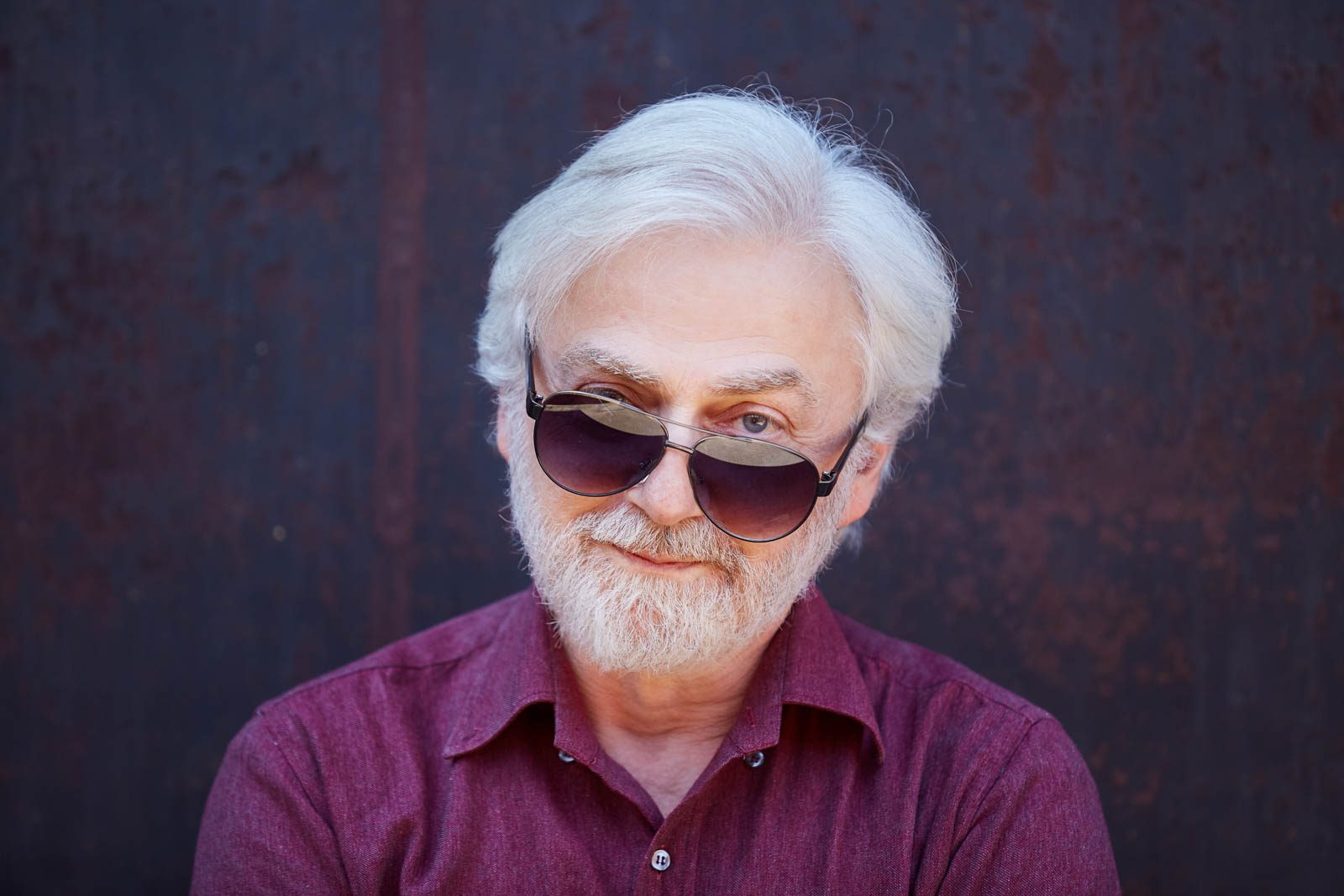
Krystian Zimerman in Basel, Switzerland, on April 19, 2018. Archive photograph, not a portrait from 2026. CC BY-SA 4.0 · Wikimedia Commons
Krystian Zimerman will turn 70 on December 5, 2026. As this guide is published on October 30, that date is still ahead. The approaching anniversary offers a chance to revisit his work without inventing a new release or presenting last year’s award as current. At Brecilia, we checked his career history and recording entries to suggest a starting route that requires no previous knowledge of the classical repertoire.
There is a more useful question than deciding whether a pianist is “the best”: what can we discover by following him from one format to another? A solo recital, an orchestral concerto and a chamber work involve different relationships. Zimerman’s career allows us to explore those differences without confusing the performer’s prominence with authorship of the music.
The date and birthplace, without bringing the birthday forward
The Polish Music Library records his birth on December 5, 1956, in Zabrze. The same profile documents his studies with Andrzej Jasiński and his victory in the 1975 Chopin Competition. These references explain his association with the Polish piano tradition, but do not define the limits of his repertoire.
Full dates should be retained. Saying he “turns 70 this year” is correct; saying he is “already 70” in late October would not be. It would also be misleading to turn the anniversary automatically into a commemorative tour. The sources used here support his artistic history and birth date, not a special birthday concert schedule.
This article therefore focuses on a catalogue guide and context. It does not replace an events listing or promise appearances in a particular city.
A Brahms album for understanding chamber music
One recent entry in that catalogue is the album of Brahms’s Piano Quartets Nos. 2 and 3, released on April 4, 2025. Deutsche Grammophon’s announcement, dated January 10 that year, names his partners: Maria Nowak on violin, Katarzyna Budnik on viola and Yuya Okamoto on cello.
The word quartet can confuse listeners arriving from other musical traditions. Here it does not mean four pianos: it describes an ensemble of piano and three string instruments. Nor does it turn the other musicians into anonymous accompaniment. Their names are essential album information.
We suggest beginning with that idea of conversation. Instead of looking only for when the piano stands out, we can ask which instrument introduces a phrase, who continues it and how attention is shared. These are not conclusions from a listening session we claim to have undertaken for this article, but an accessible way to frame the reader’s exploration.
The recognition belongs to a specific year
The album received the Chamber Recording of the Year award at the 2025 Gramophone Classical Music Awards, according to the label’s statement of October 16, 2025, which dates the ceremony to the previous day. The distinction recognises the work of all four performers, not a new composition written by Zimerman.
That recognition can help locate the recording, but does not oblige anyone to enjoy it or replace personal experience. An award is a contextual reference, not a universal verdict on how each listener should react. Mentioning it in 2026, we retain its date: it is not news about this year’s awards.
The same caution helps when searching for reviews. A page can appear in search results today even though the event described happened many months ago. Consultation date, publication date and event date are different pieces of information.
Three formats, three ways of paying attention
The label’s discography and biography identify recordings devoted to Schubert, Beethoven and Szymanowski, as well as Brahms. References include Schubert sonatas released in 2017, Beethoven concertos with the London Symphony Orchestra and Simon Rattle in 2021, and the Szymanowski album of 2022.
Those references can form a route through formats rather than a competitive ranking. In solo piano, all the musical information comes from one instrument. In a concerto, the piano interacts with an orchestra and musical direction. In chamber music, a small ensemble shares the work’s development with its individual participants particularly clearly exposed.
There is no need to play entire albums in one sitting. Choosing a movement, returning to it and then switching formats can be more instructive than accumulating hours of playback without knowing what is being compared. Familiarity can also grow through small repetitions.
Chopin is not the only doorway
The official Praemium Imperiale profile recalls, alongside his Chopin Competition success, his relationship with Lutosławski: he premiered the composer’s Piano Concerto in 1988, with the composer conducting. The document relates to the recognition received in 2022, so we do not use it as a current schedule.
This reference broadens the frame. A performer associated with a competition and a composer is not necessarily confined to them. For anyone who already knows his name through Chopin, exploring another combination of composer, ensemble and period can be a more revealing next step than seeking another ranking of great pianists.
Credits should also be read correctly. The composer wrote the work; the pianist performs it; other musicians and, where appropriate, a conductor participate in that realisation. Separating those roles makes searches easier and avoids attributing compositions to the performer on the cover.
A route without homework or promises
Before Zimerman’s 70th birthday, the most interesting approach is not to turn a date into a cultural obligation. We can use it to organise an exploration around specific questions: what instrumental formation are we hearing, who is involved, which work is it, and which recording does it belong to?
Our editorial suggestion is to retain those four details when saving a piece. A movement’s title alone may be insufficient if we later want to return to the same version. Composer, work, performers and album provide a much more stable map.
We offer no verdict here on the sound of each recording or an experience of attending a concert. We offer a documented route so readers can build their own. The anniversary arrives in December; the recordings, with their credits and dates, allow an earlier start without inventing celebrations that have not been announced.


