Madrid y su oferta musical
Madrid concentrates one of the largest offers of live music in Spain. Musical theatres on the Gran Vía, concert halls and festivals share the same calendar, and the result is a city where a single week can move from a stage production to a club show without leaving the centre. The Spanish capital hosts major international tours and, at the same time, sustains an independent scene rooted in neighbourhoods such as Malasaña and Lavapiés. Flamenco tablaos and popular verbenas coexist with the programming of auditorios and stadiums. None of these worlds is a museum piece: they overlap, borrow audiences and feed one another. Madrid's night is part of its cultural identity, and music is one of the main reasons the city stays awake.
La Gran Vía y los musicales
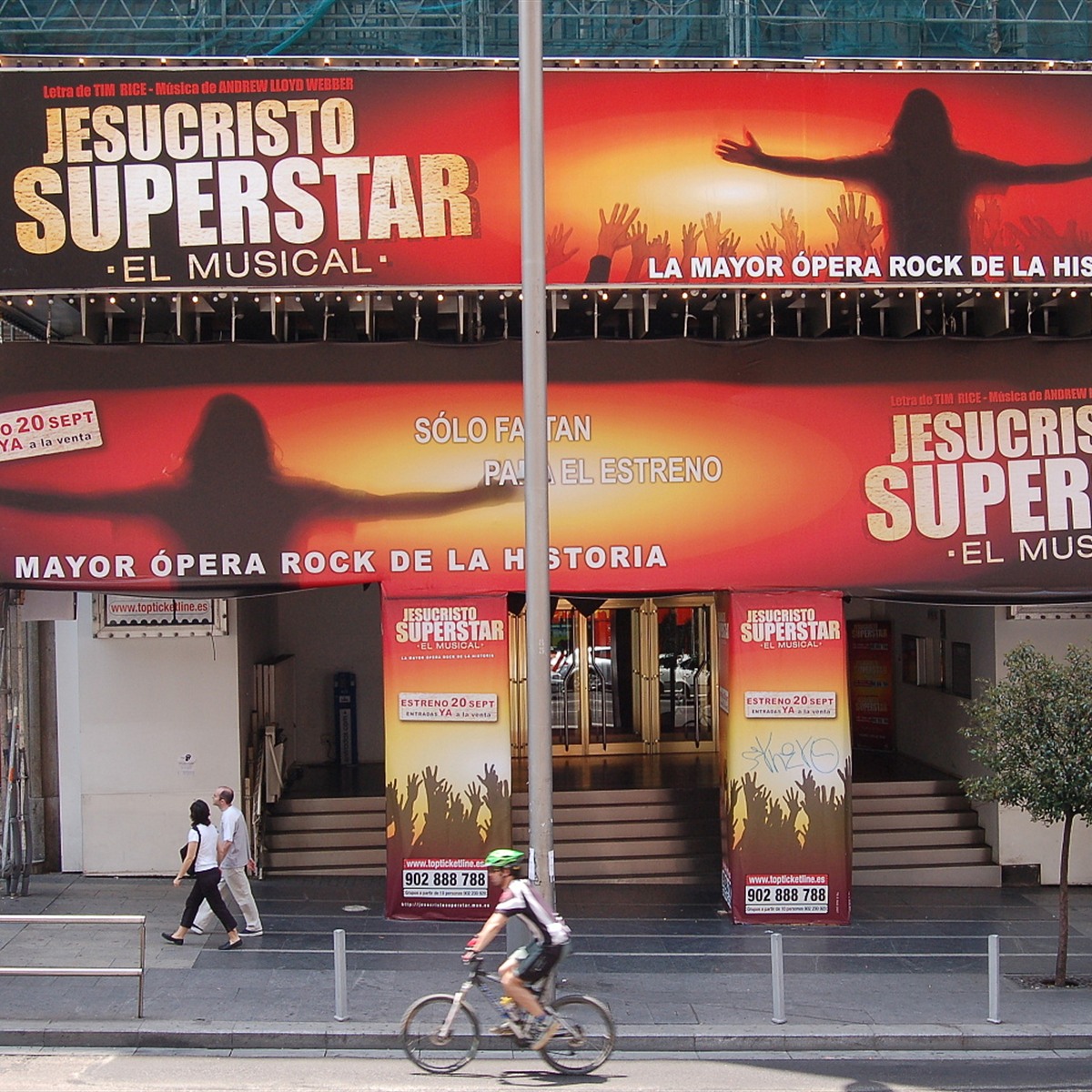
The Gran Vía is the address most associated with Madrid's musical theatres, and for many visitors a musical is the first contact with the city's live music. The avenue works as a stage district: large productions, long runs and an audience that mixes locals with travellers who plan a trip around a show. What makes the Gran Vía interesting is not only the scale of its theatres but the way they sit inside a wider programme. A musical one night and a concert hall the next is a perfectly normal sequence here, because the musical theatres are part of the same ecosystem as the auditorios, the stadiums and the clubs. The result is a central axis where the most polished, family-facing side of Madrid's music scene meets everything else the city programmes after dark.
Salas y escena independiente
Beyond the big stages, Madrid's concert halls carry the weight of the city's day-to-day music life. This is where the independent scene is most visible, particularly in Malasaña and Lavapiés, two neighbourhoods that keep a steady relationship with live sound. The offer here is not built around a single genre or a single audience: it is a circuit of rooms and nights that runs in parallel with the mainstream calendar. That parallel circuit is what gives Madrid its texture, and it is also what rewards a bit of curiosity. If you want to understand how the city listens rather than only how it performs, this is the layer to follow. You can start with the music section at music.brecilia.com and let the names lead you towards the rooms.
Flamenco y verbenas
Flamenco holds a distinct place in the city's programme. The tablaos flamencos are a permanent fixture of Madrid's musical offer, and they operate alongside the auditorios and stadiums rather than in isolation from them. At the other end of the scale sit the verbenas populares, the neighbourhood celebrations where music moves outdoors and the audience is the street itself. Both formats say something about how the city treats live performance: it is not confined to ticketed rooms, and it is not confined to a single tradition. A tablao and a verbena belong to the same cultural landscape, and Madrid is one of the places where that coexistence is most visible. For a visitor, the contrast between the two is one of the most revealing things the city can offer.
Festivales y grandes giras
Madrid is a stop on major international tours, and festivals add another layer to an already dense calendar. The city's capacity to host large-scale shows — in stadiums and auditorios — is part of why so many tours pass through, and it is also why the local programme never feels like a single continuous season. Big tours bring the widest audiences, festivals concentrate them, and the concert halls absorb the rest of the year. For anyone following the scene, this means the practical question is rarely whether something is happening, but which of several simultaneous options to choose. That abundance is the defining trait of the city's musical offer, and it is also the reason the local night has such a strong reputation beyond Spain. Following the schedules is easier when you have a channel that keeps track: radio.brecilia.com is a good place to stay close to what is moving.
Cómo vivirlo y qué escuchar
The most straightforward way to experience Madrid's music is to combine scales. Take a musical on the Gran Vía for the polished, large-format side of the city; spend another night in the concert halls of Malasaña or Lavapiés for the independent scene; and leave room for a tablao flamenco, which belongs to a tradition that runs through the city independently of passing trends. Around all of this, festivals and major tours fill the stadiums and auditorios, while the verbenas populares take music back to the street. Because Madrid's night is part of its cultural identity, the programme is not limited to a weekend or a season — it is continuous, and it rewards people who follow it rather than simply booking one headline event. To go deeper into venues, scenes and listening routes, the guides at brecilia.com/blog are a useful companion, and the music section at music.brecilia.com is the natural next step once you have decided which night of Madrid you want.
Where can you watch musicals and live music in Madrid?
Madrid’s musical theater district is centered along Gran Vía —often called the Spanish Broadway with historic venues like Teatro Lope de Vega, Teatro Rialto, and Teatro Coliseum— while live music thrives across neighborhoods such as Huertas, Malasaña, Lavapiés, and Chamberí. Together with the Teatro Real and Auditorio Nacional, these districts offer nightly concerts across every genre.
What are the most iconic live music venues and flamenco tablaos in Madrid?
Landmark Madrid live music clubs include Café Central, Sala El Sol, Galileo Galilei, Clamores, Siroco, and La Riviera, alongside world-renowned flamenco tablaos such as Corral de la Morería, Cardamomo, and Café Ziryab. For another perspective on major concerts in the Spanish capital, read our review of Shakira’s 2026 Madrid concert residency.