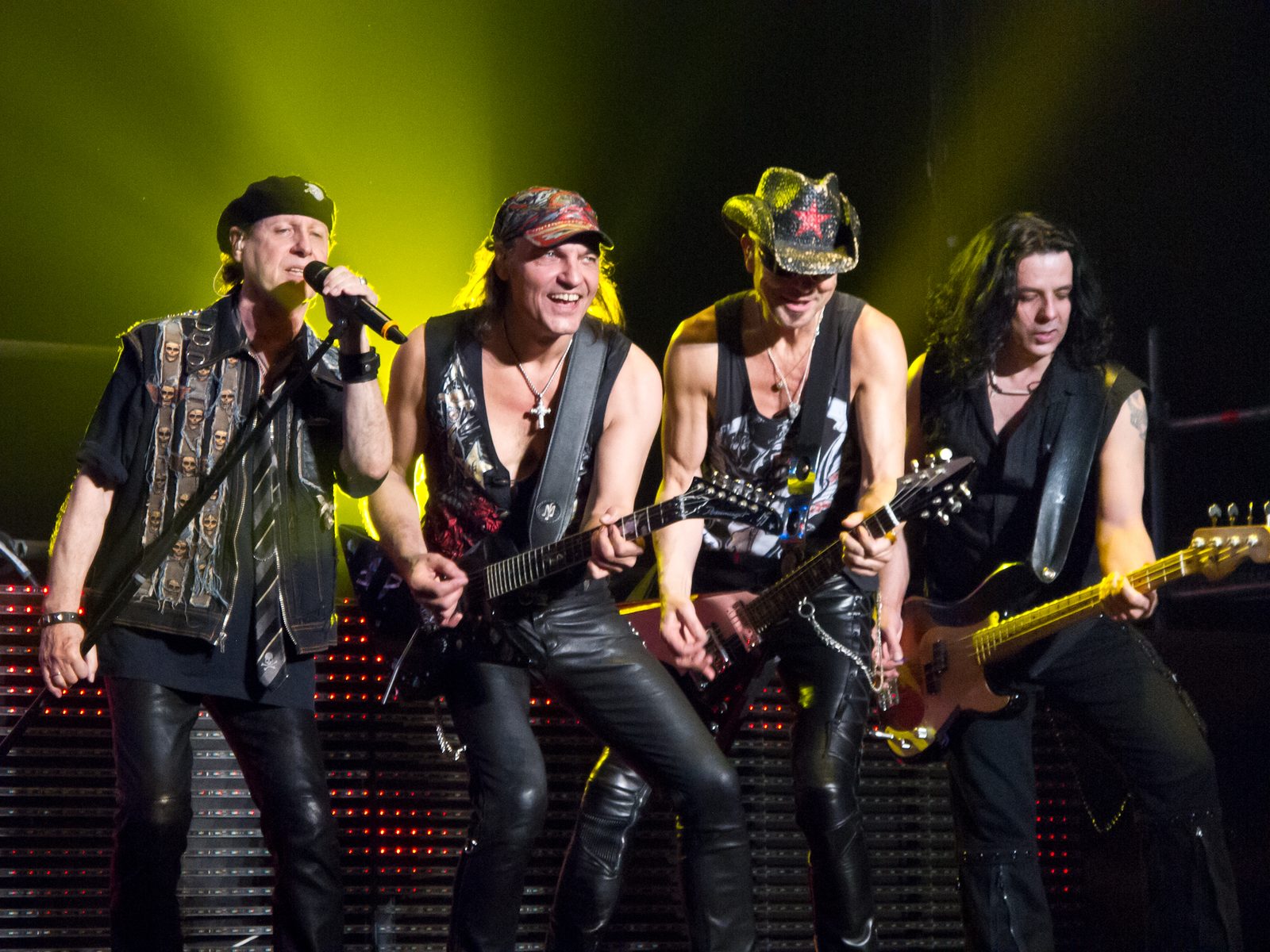
Scorpions in Madrid, March 7, 2014. Archive photograph, not an image of the lineup or tour of 2027. CC BY-SA 3.0 · Wikimedia Commons
Scorpions did not begin with the image many listeners now associate with their large concerts. Before the anthems shared by crowds came a first album, a group finding its direction and recordings now circulating with a different mix. At Brecilia, we reviewed the official information on Lonesome Crow and the German band’s schedule to separate three things: the original album, the 2026 edition and the concerts actually listed on the calendar.
This is a documentary guide, not a review based on comparative listening or an attended performance. The distinction matters because a new edition allows discussion of verifiable technical decisions, but does not justify claiming it sounds better without making that comparison.
What was released in February 2026
The official announcement of February 27, 2026 presents a new mix of Lonesome Crow, made by Hans-Martin Buff from original tapes held in the Conny Plank archive. The described offering includes limited transparent vinyl with a gatefold sleeve, digisleeve CD, download and a Dolby Atmos mix. The notes include an interview with Klaus Meine and Rudolf Schenker.
The album contains seven pieces, including “I’m Goin’ Mad,” “In Search of the Peace of Mind” and the title track. These are details of this edition, not an announcement of an album of unreleased songs. Nor is this a release that happened today: the documented date is February, while our consultation takes place on October 30, 2026.
For anyone finding several versions in a shop or platform, this precision helps avoid buying or selecting the wrong edition. The album title alone does not identify the technical treatment, medium or additional material.
A new mix does not mean a new recording
It helps to separate terms often grouped together in reissue campaigns. A recording captures a performance. A mix organises the recorded elements, their levels and their relationship within the result. Mastering prepares that mix for distribution. Changing one of these stages does not necessarily mean repeating the others.
That is why “new mix” should not become “Scorpions rerecord their debut.” The cited announcement describes working with original tapes. This is not merely specialist terminology: it explains what is offered and what remains a record of that period.
It also helps set expectations. More formats do not automatically mean more songs. A physical edition may appeal for its presentation or documentation; a digital edition for ease of access. These are different reasons, neither of which demonstrates artistic superiority by itself.
A beginning before the most familiar image
The history published by the band dates its formation by Rudolf Schenker in Hanover to 1965 and its first album to 1972, produced by Conny Plank in Hamburg. That beginning preceded the phase that made later songs familiar to very broad audiences.
The official account also recalls Michael Schenker’s early presence and the subsequent personnel changes. We should not project the current lineup onto every old cover or attribute every recording in a long catalogue to the same musicians. In a reissue, the original work’s credits and those for recent technical work answer different questions.
Our suggested approach is simple: encounter the debut as a document with its own identity, rather than demand an advance compilation of the later hits. Revisiting the beginning of a career can be more interesting when we stop looking only for the sound we already know.
Comparing without turning curiosity into an exam
Anyone exploring this edition could begin with one piece and note which version they are using. Then, if another identified edition is available, they can compare without simultaneously changing volume, device and playback mode. This makes it easier to distinguish a mix difference from one caused by equipment.
There is no need to choose a winner. Useful questions include where the voice seems to sit, how instruments and silences coexist, and which elements attract attention first. These are questions for the reader’s listening, not conclusions we attribute to a test that never happened.
For spatial formats, it also helps to check which playback the service and device actually support. Dolby Atmos appearing in a listing does not mean every combination of headphones, application and settings delivers the same experience. Before buying hardware, it is worth understanding the chosen format’s requirements.
The schedule needs a different reference date
Catalogues and concerts are not updated at the same pace. A presentation text may keep circulating after a show has changed. The official statement of September 4, 2026 announced the postponement of September performances in Mexico and Las Vegas because of unforeseen circumstances, with a return planned for 2027. We add no medical explanations or causes that the notice does not document.
For a current check, the practical reference is Scorpions’ calendar, which, when we reviewed this article, showed Zapopan on August 27, 2027, Mexico City on August 30 and Monterrey on September 2. These are announced future dates, not completed concerts or proof of ticket availability.
Anyone holding a ticket should check the notice for their event and the relevant purchasing channel. Conditions applying to a particular transaction cannot be inferred from a general note about the whole tour.
What is worth keeping from this review
Two different searches lie behind the name Scorpions: understanding their music and planning an outing. The first needs credits, context and clear identification of editions. The second requires current dates, venue and admission conditions. Mixing them without distinguishing their sources produces avoidable errors.
For us, the interest of Lonesome Crow in 2026 lies in the opportunity to return to the beginning with more precise questions. We can examine how a historical recording is presented without declaring every reissue essential. We can follow a schedule without turning an old announcement into a current promise.
The best starting point is not buying everything or memorising the discography: it is choosing an identifiable edition, reading its credits and letting curiosity determine the next step. Archive and present meet there, provided we do not confuse their dates.


