Bluefields and the Nicaraguan Caribbean
Bluefields is the capital of Nicaragua's South Caribbean Coast Autonomous Region, and it is a city that breathes to a different rhythm from the Pacific side of the country. Its identity is a blend of Afro-Caribbean, Indigenous and British heritage, and that blend is visible in the way the city speaks, cooks, celebrates and organises its daily life. The Caribbean is not a backdrop here; it is the ordinary texture of the place.
The city lives from fishing, trade and its port. Those three activities shape the working day, the timetable of the streets and the conversations in the market, and they also shape the cultural calendar: a waterfront town keeps time by arrivals and departures, by the boats that come in and the goods that move out. Within that setting, music is less a specialised profession than a shared vocabulary — something played at home, in the barrio, at celebrations and along the water. It is that everyday musicality that the Palo de Mayo turns, once a year, into a public festival.
What Is the Palo de Mayo
The Palo de Mayo is Bluefields' best-known celebration: a May festival built around music, dance and a parade centred on the maypole. Its roots are Afro-Caribbean, and that origin is not decorative — it explains the structure of the celebration, in which movement, percussion and collective participation matter more than spectacle or formal staging.
Traditionally the festival runs from 1 May onwards, filling the month with cultural and gastronomic activities. Because the programme is communal rather than ticketed ceremony, the celebrations spread across neighbourhoods and public spaces rather than staying in a single venue. For a visitor, the honest way to describe the Palo de Mayo is as a season rather than an event: a stretch of weeks in which the city's cultural life is unusually concentrated and unusually public. The maypole stands at the centre of the imagery — a fixed point around which dancing, music and the parade organise themselves.
The Music: Creole, Calypso and Drums
Local music in Bluefields includes creole rhythms, and songs are sung in both English and Spanish — a bilingual musical reality that reflects the city's mixed heritage far more directly than any written description can. Percussion carries much of the weight: drums set the pulse, and around them voices move between the two languages, sometimes within the same song.
The wider Caribbean songbook is part of the reference points for this sound world, and calypso belongs to the vocabulary that coastal musicians draw on. What matters most for a listener is the function of the music: it is made for dancing and for accompanying a parade, not for seated contemplation. That is why recordings made in the region often carry the ambience of a street — the sense of a crowd, of movement, of a performance that is going somewhere. You can follow the sounds of the Nicaraguan Caribbean, and the wider musical culture around it, through the selections at music.brecilia.com and in the company of radio.brecilia.com, where the region's rhythms sit alongside the rest of the magazine's listening.
The Parade and Port Life
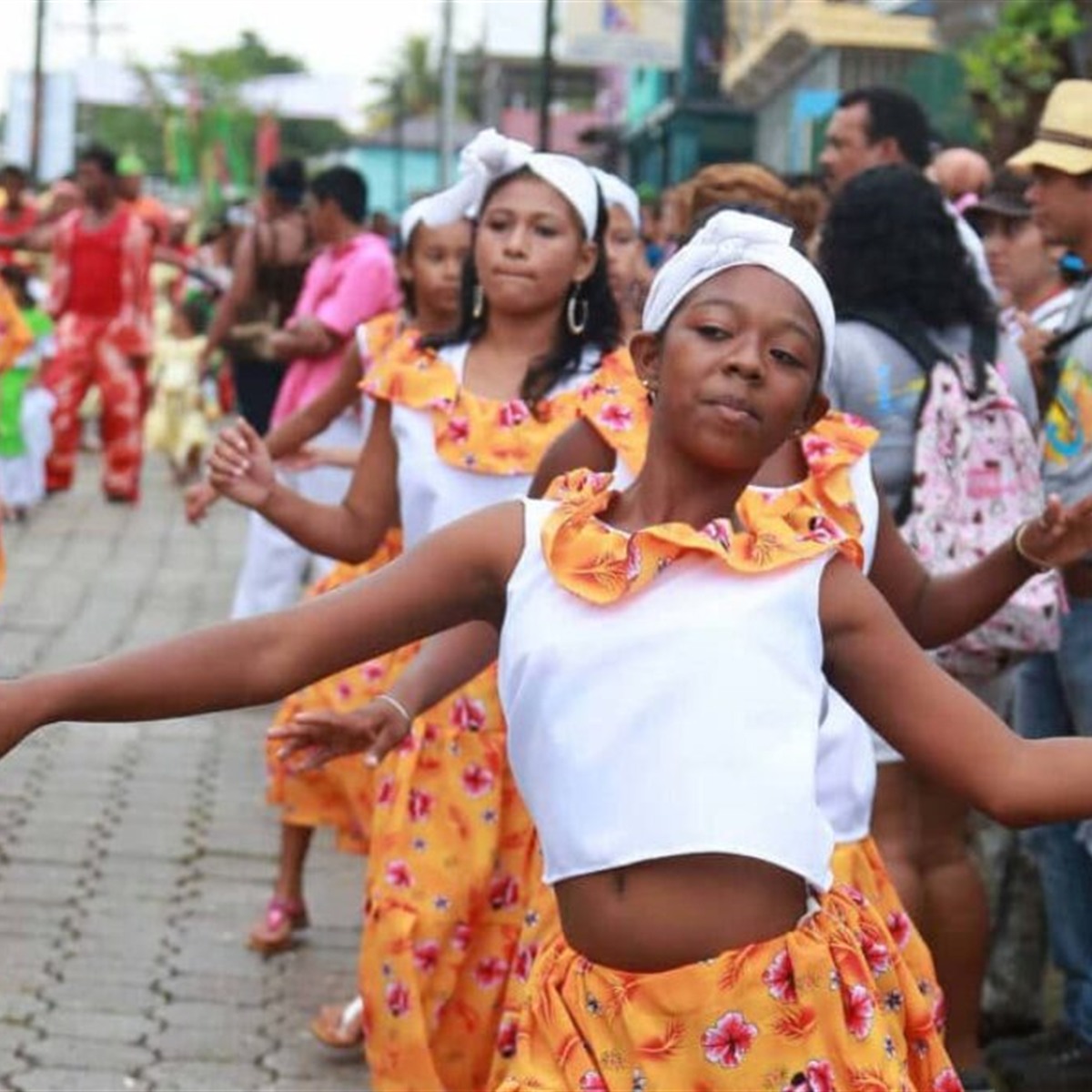
The parade is the moment when the festival becomes visible as a whole: dancers, musicians and spectators moving through the city around the maypole. It is a public gesture in a city whose public life is already oriented towards the street and the waterfront.
Port life and festival life are not separate worlds in Bluefields. The city lives from fishing, trade and the port, so the population that dances in May is the same population that works the boats and the docks the rest of the year. That continuity gives the parade its particular character: it looks like a city taking a day — or a month — to perform its own identity rather than a stage-managed show imported for outsiders. Understanding how the port sustains the city is, in a real sense, part of understanding the festival.
Food and Afro-Caribbean Culture
The Palo de Mayo programme explicitly includes gastronomic activities, and that is consistent with a celebration rooted in Afro-Caribbean tradition, where cooking is a form of cultural memory rather than a side attraction. The city's mixed Afro-Caribbean, Indigenous and British heritage is expressed at the table as much as in the dance, and the festival is one of the moments when that expression becomes collective and public.
For a cultural visitor, the food side of the festival is not an addendum to the music; it is a parallel language. Both are communal, both are transmitted through practice rather than instruction, and both are closely tied to the household and the neighbourhood. Approaching the gastronomic activities with the same curiosity you bring to the parade will give you a much fuller picture of what the Palo de Mayo actually is.
How to Experience It and What to Listen To
The festival is celebrated traditionally from 1 May onwards, with cultural and gastronomic activities across the month. The most useful preparation is not logistical but musical: arrive already familiar with creole rhythms and with songs that move between English and Spanish, so that the parade sounds like recognition rather than novelty.
Start with recorded listening. The archive at music.brecilia.com is a good place to build context on Caribbean and Latin American repertoire, and the editorial pieces at brecilia.com/blog provide the cultural background that makes a festival legible. Once in Bluefields, follow the city rather than a checklist: the celebrations are communal and spread out, so the best experiences tend to come from staying with the crowd, the drums and the maypole for as long as the afternoon allows.
When is Palo de Mayo celebrated in Bluefields and which rhythms and instruments define it?
The Afro-Caribbean Palo de Mayo (Maypole) festival fills the entire month of May —reaching its peak during the final week— in Bluefields on Nicaragua’s South Caribbean Coast, uniting Creole, Garífuna, Miskito, Rama, and Ulwa traditions to welcome the rainy season. Its infectious sound blends soca, calypso, reggae, and Creole grooves played on hand drums, cowbell, banjo, donkey jawbone (quijada de burro), and washtub bass (tináfono), famously championed by bands like Dimensión Costeña.
Which historic neighborhoods and culinary dishes highlight Palo de Mayo in Bluefields?
Colorful street comparsas, ribbon-draped maypole dances, and the closing “Tulululu” procession sweep through Bluefields’ historic Creole barrios —Old Bank, Beholden, Cotton Tree, Pointeen, and Loma Fresca— accompanied by coconut bread, rundown stew (rondón), and spiced patí pastries. To explore another iconic corner of Nicaraguan culture and folk music, read our guide to Isla de Ometepe: twin volcanoes, petroglyphs, and traditional music in Nicaragua.