Some cities are defined by a skyline, others by a single monument. Masaya is defined by the way it sounds and the way it is made by hand. The city is known as the Cradle of Nicaraguan Folklore, and the phrase holds up when you look at what lives side by side here: the marimba, traditional dances and craft workshops devoted to hammocks, leather and black ceramics. Folklore in Masaya is not a performance staged for visitors; it is the everyday texture of a place where music, craft and celebration overlap.
Masaya and Its Title as Cradle of Folklore
The title — Cuna del Folclor Nicaragüense — is the shortest possible summary of the city's cultural role. It gathers under one name several traditions that in other places would be kept apart: an instrument, a repertoire of dances, a craft economy and a calendar of patron saint festivities. In Masaya these elements share the same ground, and that proximity is what makes the title credible rather than decorative.
For a cultural magazine, Masaya is a useful case study because it shows how folklore actually survives: through use. The traditions are not preserved behind glass. They are taught, played, danced, made and passed on, and each of those activities supports the others. A dance needs musicians; musicians need occasions; occasions need the communities that keep the festive calendar alive. That chain is the real content of the city's title, and it is the thread we follow in the Brecilia blog.
Marimba and Traditional Dances
The sound most closely associated with Masaya's traditional music is the marimba de arco — the bowed marimba, an instrument whose form and playing style belong to the region's older musical layer. It is the thread that connects the city's festive life to its musical memory.
Traditional music here is inseparable from the fiestas patronales, the patron saint celebrations that give public music-making its annual rhythm. This is where the repertoire is heard at its fullest, and where the dances that belong to the same inheritance are performed. Those dances are transmitted between generations through practice rather than through notation, which is why the festive calendar matters so much: it is the occasion that keeps the steps in use.
That connection between instrument, dance and calendar is what a listener notices first. Masaya's folklore is ensemble folklore: the marimba de arco does not stand alone as a solo voice so much as anchor a collective event. Recordings that trace this repertoire can be explored in the music section.
Craftsmanship and the Mercado de Artesanías
Alongside the music, Masaya is a city of workshops. Hammocks, leather goods and black ceramics are the crafts most readily identified with the city, and each requires a distinct set of skills kept alive in its talleres. Black ceramics in particular give Masaya a visual signature as recognisable as its sound.
The Mercado de Artesanías is the point where these separate worlds meet. It is a cultural meeting point in a very practical sense: craft, conversation and the city's musical life converge there, and a visitor looking for a hammock or a piece of black pottery also encounters the wider culture that produced them. For anyone trying to understand Masaya on a first visit, the market is the natural starting point — not because it summarises the city, but because it is one of the places where the city actually gathers.
The Volcano and the Cultural Landscape
Masaya's folklore is inseparable from its geography. Very close to the city lies the Parque Nacional Volcán Masaya, one of the most active volcanoes in the country. The proximity matters culturally as much as it does scenically: the landscape sets the scale against which the city's festivities and its crafts are measured.
A cultural portrait of Masaya that ignored the volcano would be incomplete. The national park belongs to the same territory that produced the dances and the workshops, and the presence of an active volcano nearby gives the region's traditions a specific gravity. Writing about Masaya tends to move between the market, the marimba and the volcanic horizon, and that movement is not a detour — it is the shape of the place.
El Güegüense in Masaya
El Güegüense has a recent chapter in Masaya worth noting. The work has been represented in the city since 2011, following decades of interruption. That gap and its closing say something important about how intangible heritage behaves: it can lapse, and it can be revived when a community decides to bring it back.
For anyone interested in traditional performance, this is one of the most telling details about Masaya's cultural life. A representation that had been interrupted for decades is again part of the city's calendar, carried by the same ecosystem of festivities, musicians and neighbourhood organisation that sustains the marimba and the dances.
How to Experience It and What to Listen To
Approaching Masaya as a cultural destination means approaching it through sound and craft rather than through a checklist. Start with the marimba de arco and the dance repertoire tied to the fiestas patronales; add the workshops producing hammocks, leather and black ceramics; and treat the Mercado de Artesanías as a place to spend time rather than to pass through. If your visit coincides with a patron saint celebration, the music will be at its most complete.
For listening before or after a visit, Brecilia Radio is a good companion, and the music archive offers a broader frame for the region's traditional repertoire. Masaya rewards the listener who arrives curious about context: the title of cradle of folklore is not a slogan to be admired from a distance but an invitation to hear how a city keeps its own music alive.
Why is Masaya called the cradle of Nicaraguan folklore and which instrument leads its music?
Officially named Nicaragua’s Capital of National Folklore, Masaya —especially the Indigenous barrio of Monimbó and nearby Pueblos Blancos like Catarina and Masatepe— preserves the country’s richest concentration of craft workshops, folk dances, and traditional tunes. Its signature instrument is the bow marimba (marimba de arco), accompanied by six-string guitar and four-string guitarrilla on classic pieces such as “El Acuartillado,” “Dos Bolillos,” “El Zapateado,” and “La Mora Limpia.”
What are the main festivals and folkloric dances celebrated in Masaya?
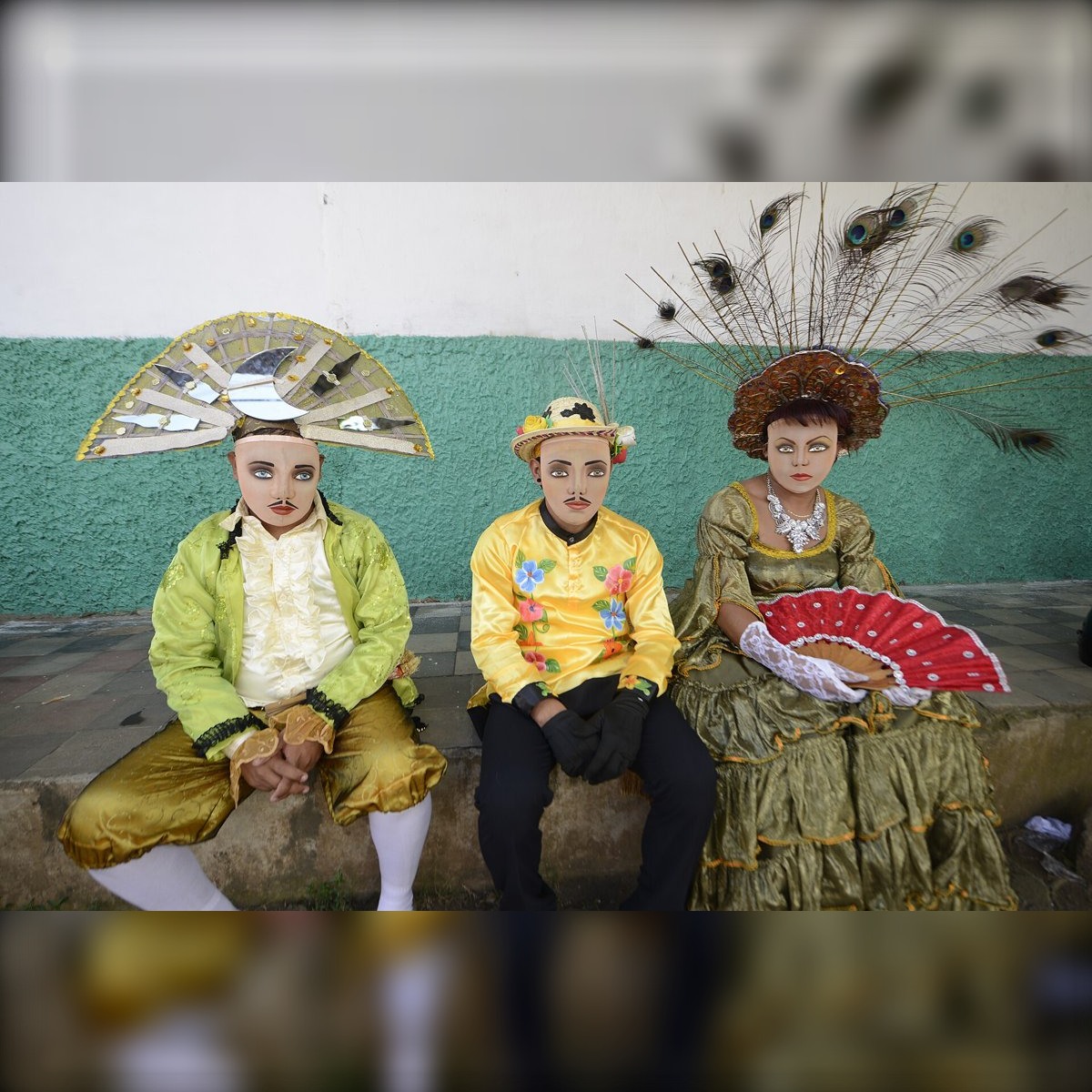
From September through November, Masaya hosts the prolonged San Jerónimo festivities featuring Las Inditas, Los Diablitos, El Torovenado, the nocturnal Los Agüizotes parade on the last Friday of October, and chichero brass bands alongside the historic Artisans’ Market. To explore another UNESCO-recognized pillar of Nicaraguan music, satire, and dance, read our guide to El Güegüense of Diriamba, Nicaragua’s satirical folkloric masterpiece.