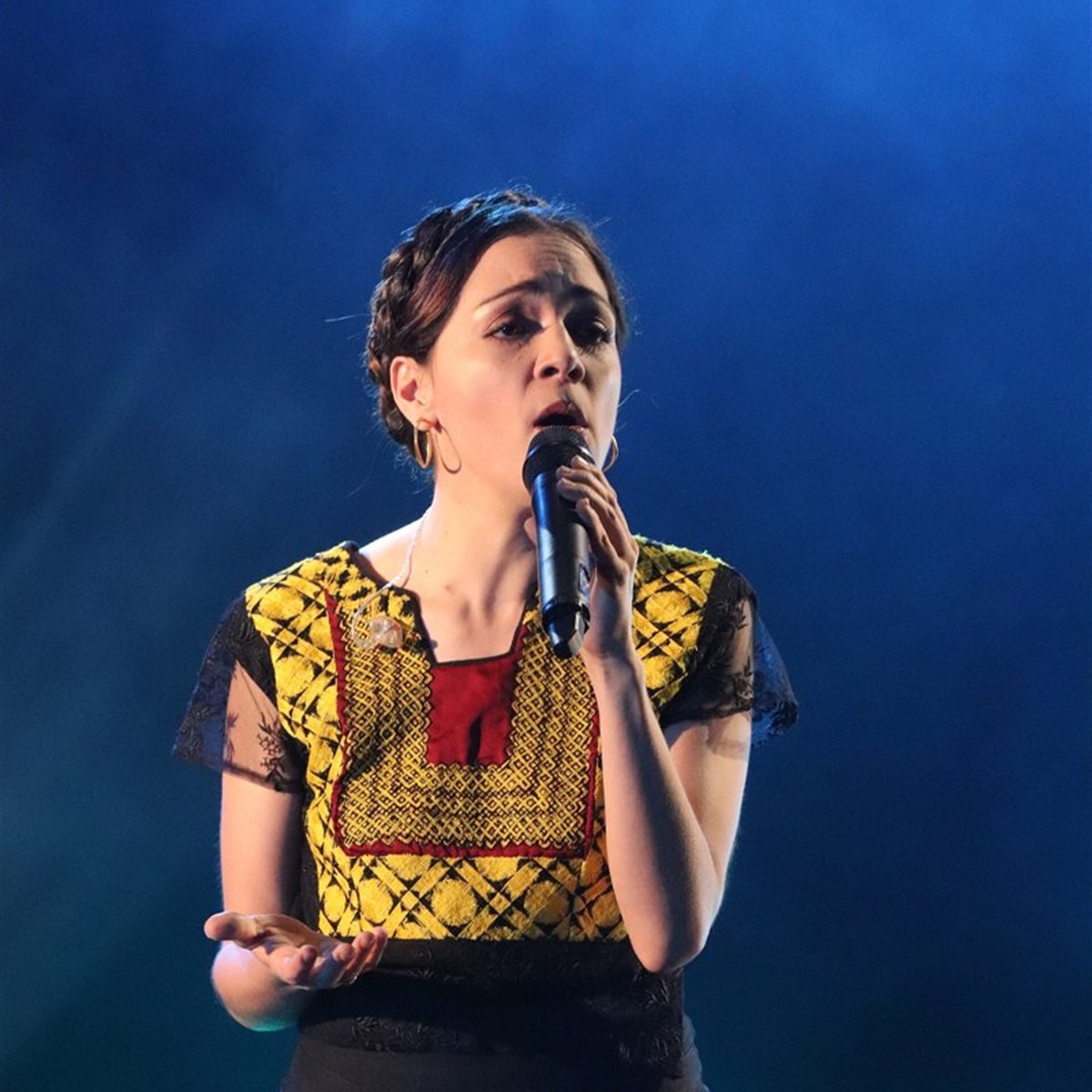
Who Is Natalia Lafourcade
Natalia Lafourcade is a singer-songwriter and multi-instrumentalist born in Mexico City in 1984. Those are the essential coordinates for any introduction: a Mexican artist formed in the capital, a writer and performer, and a musician able to work across multiple instruments. In her music, the given facts point to a clear aesthetic: pop, folk, and Latin American sonorities are combined rather than kept in separate compartments. That combination is central to why her work speaks to listeners interested in both contemporary songwriting and the folk traditions of the region. It also explains why she is a useful figure for anyone tracing how Latin American folk travels through modern pop. The description is compact, but it is not thin: singer-songwriter names her role, multi-instrumentalist names her range, and the trio of pop, folk, and Latin American sonorities names her sound.
Childhood and Formation
The available record gives only a few firm details about her early years: she was born in Mexico City in 1984. The article does not need to invent a childhood anecdote to explain her formation. No conservatory or childhood teacher is named in the facts, so none is asserted here. What matters is the result visible in her public profile: she emerged as a singer-songwriter and multi-instrumentalist, with a practice that joins writing and performance across multiple instruments. Mexico City is the biographical starting point, and the rest of her formation is best understood through the work itself—through the way pop, folk, and Latin American sonorities meet in her songs. That is a cautious way to write about childhood and formation when the facts are limited: state what is known, then follow the evidence into the music.
Hasta la Raíz
Hasta la Raíz (2015) is the album that won recognition and Latin Grammy awards. In the facts available, it functions as a landmark: a 2015 release that brought wider recognition and formal awards recognition from the Latin Grammy organization. The album's title is a natural first reference point for new listeners, and it is a useful one. It sits at the intersection described in her music generally: pop, folk, and Latin American sonorities. Rather than treating those elements as separate genres, the album belongs to a body of work in which they are woven together. For listening, start there, then move outward. The key fact is not a track-by-track story but the album's role as a recognition-bearing work.
Latin American Folk and Collaborations
Folk is not a side note in Lafourcade's profile; it is one of the named ingredients. Her music combines pop, folk, and Latin American sonorities, which means the folk element is placed in conversation with pop songcraft and with sounds from across Latin America. She has also worked with artists from different countries and styles. That collaborative range matters: it shows an artist who does not treat Latin American folk as a closed archive but as a living language that can meet other voices. The facts do not specify individual collaborators, so the safest emphasis is on the principle—cross-border, cross-style work. That principle helps explain why her music can feel both rooted and open. The collaboration fact is simple but expansive: different countries and different styles.
Awards and Recognition
The central award fact is that Hasta la Raíz (2015) won recognition and Latin Grammy awards. This is not a minor detail: the Latin Grammy recognition places her work within a formal Latin music industry context, while the broader recognition signals that the album connected beyond a single awards circle. The article should not multiply the trophy count or invent categories. What can be said is that the album's reception is part of her public story, and it supports the view that her blend of pop, folk, and Latin American sonorities has been taken seriously in the awards context. Recognition of this kind also shapes how new listeners encounter an artist: Hasta la Raíz becomes a gateway.
How to Listen to Her
A practical path is simple. Begin with Hasta la Raíz (2015), the album identified with recognition and Latin Grammy awards. Listen for the meeting point of pop, folk, and Latin American sonorities, and then follow her collaborative work with artists from different countries and styles. Because she is a multi-instrumentalist as well as a singer-songwriter, attention to texture and performance is part of the experience. Listen to Natalia Lafourcade’s complete official discography on her authorized streaming channels to trace how pop, folk, and Latin American sonorities meet in her work. For independent artists and alternative roots selections curated by our community, explore Brecilia Music, tune into Brecilia Radio, or browse editorial stories on Brecilia's blog. The goal is not to turn her into a museum piece but to hear how folk, pop, and Latin American sonorities remain active in her catalog. Start with the known landmark, then let the collaborations widen the frame.
Which albums define Natalia Lafourcade’s Latin American folk era?
The albums that shaped Natalia Lafourcade’s transition into Latin American folk music are Hasta la Raíz (2015), the two volumes of Musas (2017 and 2018) recorded with Los Macorinos, Un Canto por México (2020–2021), and De Todas las Flores (2022). Across these works, the Mexican singer-songwriter bridges Veracruz son jarocho, bolero, and traditional songcraft with warm acoustic arrangements.
Why are Musas and De Todas las Flores essential in her discography?
Whereas Musas pays tribute to classics by Violeta Parra, Agustín Lara, Chavela Vargas, and Simón Díaz with intimate acoustic guitars, De Todas las Flores offers twelve original compositions recorded on analog tape. You can also explore her latest studio work in our detailed guide to Natalia Lafourcade’s Cancionera album and credits.