Sevilla and Flamenco
Sevilla is one of the great centres of flamenco, an art form that UNESCO recognised as Intangible Cultural Heritage of Humanity in 2010. The declaration confirmed what audiences in the Andalusian capital had known for generations: that flamenco is not a museum piece but a living practice, carried by singers, dancers and guitarists, and by the neighbourhoods and venues that host them. For visitors, that means the tradition is present far beyond a single stage or a single season — in the city's public celebrations, in the small rooms where people gather to sing, and in the annual rhythm of festivals that structure the year.
That double life — public spectacle and everyday practice — is the key to reading Sevilla's flamenco scene. The city's calendar alternates moments of intense celebration with quieter, year-round activity, and the two feed each other. The Feria fills a week with music and dance; tablaos and peñas keep the repertoire alive for the remaining months. Knowing which of the two you are looking at makes a visit far more rewarding, and it explains why flamenco in Sevilla feels less like a show to be booked and more like a season to be followed.
The Feria de Abril
The Feria de Abril is normally celebrated two weeks after Semana Santa and lasts a week. Its position in the calendar matters: the city moves from the solemnity of Holy Week straight into a week of casetas, sevillanas and live music. The Feria is not a flamenco festival in the strict sense, and it should not be mistaken for one, but flamenco runs through it — in the songs performed inside the casetas, in the way sevillanas are danced, and in the live music that fills the fairground from afternoon until late at night.
For seven days, the Feria concentrates an enormous amount of the city's social life into one place. It is the point in the year when the repertoire most associated with Sevilla is heard most often and danced most widely, and when a visitor has the clearest opportunity to see how flamenco works as a shared social practice rather than as a performance delivered to a seated audience. People do not simply attend the Feria; they take part in it, singing, dancing and listening among people who already know the songs.
Casetas, Sevillanas and Rumba
The casetas are where the week actually happens. They are the gathering places around which the Feria is organised, and they are where sevillanas are sung and danced and where live music is heard throughout the week. For anyone trying to understand the celebration, the caseta is the essential unit: it shows that the Feria is built from many small groups of people who know each other, rather than from one central stage and one official programme. The music is close, social and continuous.
Sevillanas dominate the Feria's soundtrack. They are the songs most often heard in the casetas and the dances most readily associated with the week, and they set the tone for the celebration. Alongside them sits the wider flamenco repertoire, which includes rumba among its many forms. The Feria is one of the places where that breadth becomes audible, as singers move between what the crowd expects and the other material the tradition also contains. Listening for that difference is one of the quiet pleasures of the week.
Tablaos and Peñas
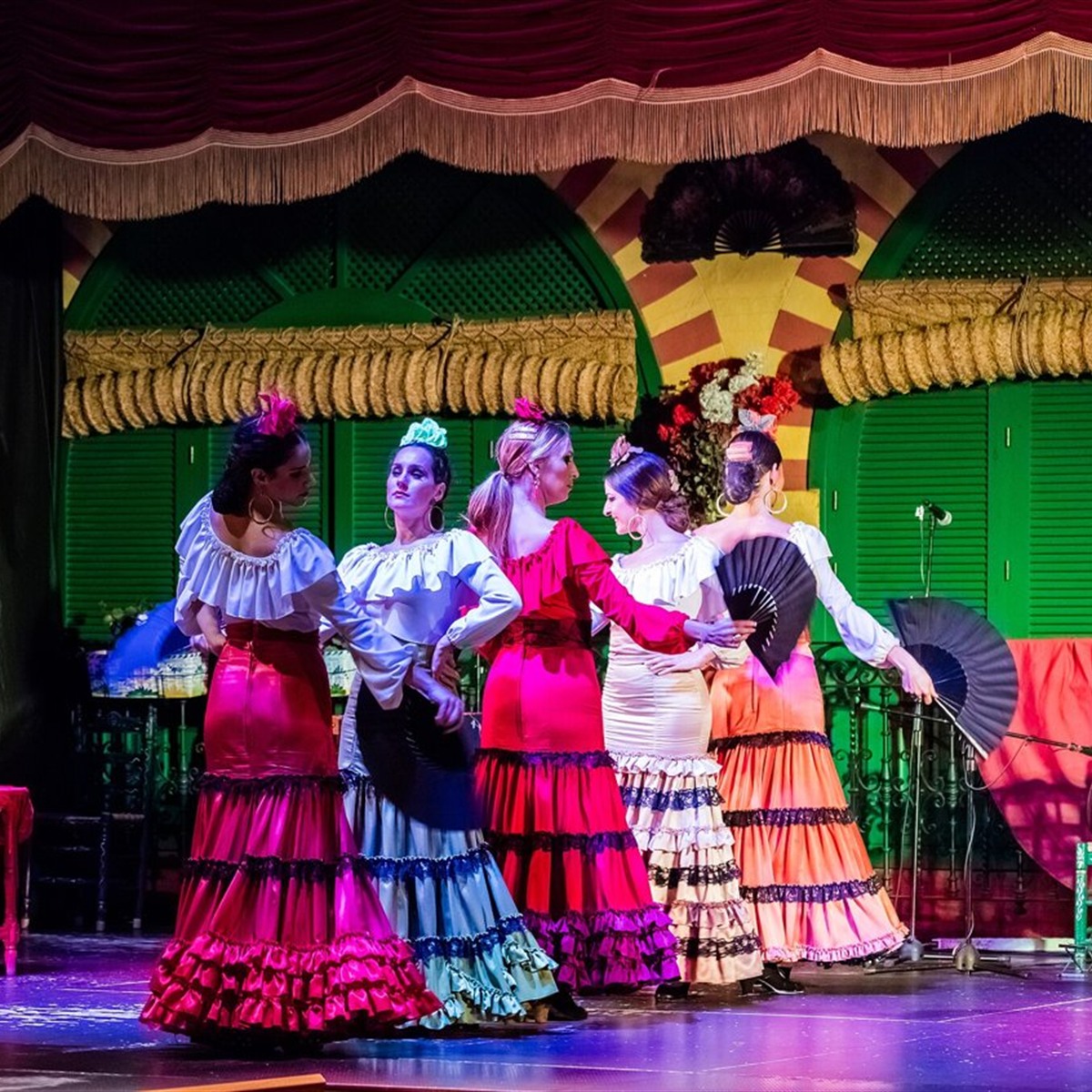
Outside the Feria week, the tradition is sustained by tablaos and peñas flamencas, which maintain flamenco throughout the entire year. Tablaos are the professional venues where cante, toque and baile are presented to an audience; peñas are the flamenco clubs and associations that form the grassroots of the scene, where aficionados gather around the music for its own sake. Between the two, the city keeps a continuous flamenco life that does not depend on the arrival of spring or the opening of a fairground.
This is what makes Sevilla a flamenco city rather than merely a flamenco season. A visitor who comes in a month far from Semana Santa and the Feria will still find performances and gatherings, and will often find them easier to approach, with smaller rooms and less competition for attention. If you want to arrive already familiar with the sound, our music platform at music.brecilia.com is a useful starting point before you book anything in the city.
The Bienal de Flamenco
Sevilla also celebrates the Bienal de Flamenco, one of the most important festivals in the genre. If the Feria shows flamenco as social practice and the tablaos show it as professional performance, the Bienal is where the art form is presented as a major public event with an international profile. For anyone planning a trip around flamenco rather than around the fair, the Bienal is the date to look for, and the natural complement to the year-round work of the city's venues and clubs.
How to Live It and What to Listen To
The practical rule for a flamenco visit to Sevilla is to decide first which experience you want. If you want the social, collective side, plan around the Feria de Abril, remembering that it normally falls two weeks after Semana Santa and lasts a week, and that its music lives in the casetas, in sevillanas and in live performance. If you want staged performance, tablaos and peñas serve that purpose throughout the year. If you want scale and programming, follow the Bienal de Flamenco. None of these replaces the others.
As for what to listen to, start with sevillanas, the form you will hear most often in Sevilla and the one that unlocks the Feria, then move outward into the broader flamenco repertoire, rumba included, to hear how the city's musicians work across registers. Radio is a good way to keep the sound close between trips, and you can listen on radio.brecilia.com. For more context on the city, the season and the music, browse our articles at brecilia.com/blog.
When is Seville’s Feria de Abril celebrated and how can you experience its flamenco atmosphere?
Seville’s Feria de Abril typically takes place two weeks after Easter week at the Los Remedios fairgrounds, opening with Noche del Pescaíto and the midnight Alumbrao lighting ceremony. Throughout the week, striped casetas, horse-drawn carriages, and neighborhood venues come alive with four-part sevillanas, rumbas, and live flamenco guitar.
Where can you hear authentic live flamenco in Seville year-round?
Historic districts such as Triana, Alameda de Hércules, Macarena, and Santa Cruz host traditional peñas flamencas, intimate tablaos, and theaters tied to the Seville Flamenco Biennial. To discover another iconic Spanish musical celebration, read our guide to Valencia’s Las Fallas festival and marching bands.