Valencia and the Fallas
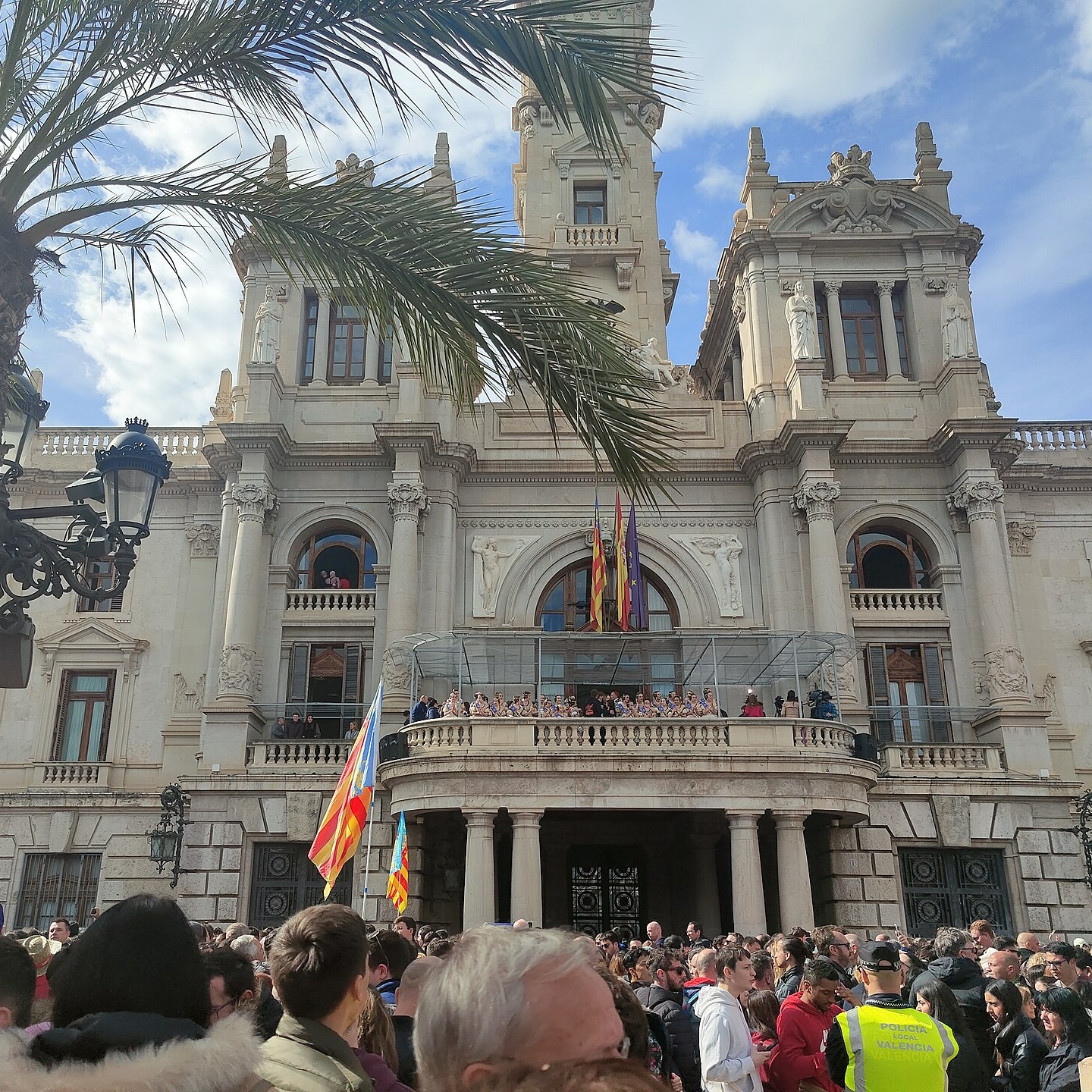
Every March, Valencia changes its rhythm. The Fallas are celebrated around the feast of San José, on 19 March, and for those days the city lives through a combination with no real equivalent elsewhere: ephemeral art, gunpowder and band music, all happening in the same streets at the same time.
In 2016 the Fallas were declared Intangible Cultural Heritage of Humanity by UNESCO, a recognition that says something important about what the festival is. It is not a show staged for visitors. It is a living practice sustained by neighbourhoods, families, and by the people who build the monuments and the people who play in the bands.
What makes the Fallas unusual as a festival is that its three ingredients are not separate attractions running in parallel. The art, the gunpowder and the music share a calendar, a set of streets and a public. Remove one and the others lose their frame.
The ninots and ephemeral art
The most visible material of the Fallas is ephemeral art. The ninots — the figures that make up the monuments — are made to exist for a very short time and then disappear. That contradiction is the heart of the celebration: months of work and an enormous sculptural effort with a lifespan measured in days.
Because the works are temporary, the Fallas turn art into an event rather than an object. You cannot visit a museum to see last season's monuments; you can only be there while they stand. That makes the festival a collective appointment with craft, colour, scale and detail — and it rewards people who stop and look properly instead of walking past.
Look closely at a single ninot and the scale of the discipline becomes clear: it is construction, painting and assembly, carried out by people who know the work will not survive the month. The point is not permanence. The point is the shared act of making something beautiful and then letting it go.
Mascletás and gunpowder
The second ingredient is gunpowder. The mascletás are the sonic signature of the Fallas: gunpowder used as rhythm, as a physical experience rather than a spectacle observed from a safe distance. It is the part of the festival that reaches you as vibration before you consciously register it as sound.
Art and gunpowder are not separate programmes in Valencia; they belong to the same celebration, and the same crowd moves from the monument to the mascletá. The contrast is the point: the handmade and the explosive, the delicate and the deafening, the long silent work of months and the few minutes that consume it.
It also explains why the mascletás divide first-time visitors. There is no neutral response to a celebration that uses gunpowder as an instrument; you either lean in or you step back, and both are legitimate ways of being part of it.
The bands of music
Band music is the third element, and the one visitors tend to underestimate. Bands of music are a deeply rooted tradition in the Comunitat Valenciana, woven into civic life rather than dusted off for a few days in March. During the Fallas that tradition moves into the street and becomes the connective tissue of the festival.
Follow a band through the crowd and you hear how the Fallas are organised emotionally: the music gathers people, marks the moments, and gives the celebration a register that neither the monuments nor the mascletás can provide. It is also the most portable part of the festival — the element you can take home with you.
That rootedness is what separates the Fallas from festivals where music is background. Here the band is not ambience: it is one of the three materials the celebration is built from, alongside the monuments and the gunpowder.
If you want to understand why the Fallas sound the way they do, start with the bands. Our catalogue at music.brecilia.com is a good place to hear that tradition outside the streets where it lives.
The Ofrenda and the Cremà
Two moments are central. The Ofrenda de Flores is the offering of flowers, the moment when the festival becomes a shared, slow-moving act of collective participation rather than a spectacle to watch. The Cremà is the burning, when the ephemeral art completes the logic of its own definition and disappears.
Between those two poles sits everything else: the mascletás, the bands, the monuments, the crowds. The Ofrenda and the Cremà give the Fallas their shape — an offering and a fire — and they are the reason the festival feels like a story with an ending rather than an exhibition with an opening.
How to live it and what to listen to
The best way to live the Fallas is to stop planning and start following. Follow the sound of a band; follow the crowd towards the mascletá; go back to the same monument at a different hour and see how it changes with the light and the people around it. The festival is dense and constant, and it rewards attention more than scheduling.
And listen deliberately. Take one evening to do nothing but follow the music, and another to stand in front of a monument and simply look. The Fallas are a festival of simultaneity, but you are allowed to choose your own order.
Bring ear protection for the gunpowder and give yourself permission to walk away from the noise for an hour. The Fallas are intense, and the pleasure is in the alternation: the loud and the quiet, the crowded and the empty, the monument and the music. That alternation is also the best way to listen to what the festival is made of.
For that listening, radio.brecilia.com keeps the Valencian sound close wherever you are, and our blog collects more context on the music, the places and the traditions behind it. Valencia in March is a city you hear before you see — and once you have heard it, the Fallas never quite leave you.
When are Las Fallas celebrated in Valencia and what role do marching bands play?
Valencia’s Fallas festival reaches its main week from March 15 to March 19 —preceded by daily 2:00 p.m. mascletàs at Plaza del Ayuntamiento starting March 1— and is recognized as UNESCO Intangible Cultural Heritage. Hundreds of Valencian wind bands and musical societies accompany every street parade, the Ofrenda floral offering, and neighborhood festivities with classic pasodobles.
What are the unmissable musical and pyrotechnic events during Las Fallas?
Essential highlights include La Crida at the Serranos Towers, La Plantà, the midday mascletàs, the Ofrenda procession, La Nit del Foc fireworks, and La Cremà on the night of March 19. To explore another iconic Spanish spring festival, read our guide to Seville, flamenco, and the Feria de Abril.